Mary Shelley’s Forgotten Gothic Tales Deserve Better Editions, So I Made One Worthy of Her Darkness
- Muna Toubi

- Dec 10, 2025
- 3 min read

People love to pretend they know Mary Shelley. “Oh yes, Frankenstein, the monster, torches, pitchforks, misunderstood creature… etc. ”Cute. Wonderful. Now name one of her short gothic tales. Just one. Exactly.
Mary Shelley didn’t just write the novel that altered science fiction forever. She also wrote a collection of short tales dripping with grief, dread, obsession, and emotional violence so elegant it almost feels rude. And yet these works get shoved into anthologies like someone sweeping bones under a rug.
Worse: the editions that do exist look like they were designed during a five-minute tea break by someone who has never known fear, sorrow, or artistic direction.
So of course I snapped.
Because these tales deserve better. And readers deserve better. And I’m painfully allergic to ugly books.
Why These Gothic Tales Are Practically Invisible
Most readers don’t even know Mary Shelley wrote short gothic fiction. Not because she hid them, but because publishers treated them like side quests that weren’t profitable enough for a glossy cover.
Anthologies bury them. Academic compilations list them like tax documents. And the mainstream conversation about Shelley starts and ends with Frankenstein, as if she didn’t spend the rest of her career whispering far more unsettling things into the shadows.
If you need proof, browse the British Library’s pages on Mary Shelley or the Romantic Circles archives. They dig up her lesser-known works because someone has to.
Here’s a sample of what’s been sitting unnoticed for centuries:
“The Mourner”
Grief, guilt, longing, self-punishment. Basically emotional horror, but dressed politely.
“The Dream”
Gothic romance, prophetic nightmares, dramatic cliffs. Mary Shelley was out here inventing the “I love you but fate hates us” genre before it was cool.
“The Sisters of Albano”
This one is so atmospheric it shouldn’t be legal. If you ever wanted Caspar David Friedrich to narrate your emotional collapse, here you go.
“Ferdinando Eboli”
Identity, duplicity, betrayal. The kind of story that makes you distrust 95 percent of humanity.
“Transformation”
Possession, body swapping, psychological ruin. A perfect tale to read when you’re already suspicious of your own reflection.
These stories are short, sharp, and deeply gothic. They deserved illustrated editions centuries ago.
Why Illustrated Editions Actually Matter
Gothic fiction is visual by nature. It wants to be seen, not just read. This isn’t minimalist literature. It’s atmosphere, architecture, ghosts, storms, symbols, faces that look suspicious in candlelight.
Illustration turns these tales into experiences. Depth, not decoration.
Which is why it’s frankly astonishing that these stories have gone so long without a properly illustrated edition. Even Oxford University Press talks about gothic imagery as a core part of the genre’s DNA. But where are the editions that reflect that?
Let’s be honest: the existing editions of Mary Shelley’s short tales are… present. They exist. Congratulations to them.
But they feel like:
photocopied academic supplements
cheap paperbacks that dissolve if sunlight touches them
covers designed by someone whose only exposure to “gothic” is Halloween aisle plastic
formats that treat the stories like chores, not art
And here’s the fun part: even Penguin Classics, with their beautifully illustrated Frankenstein edition (yes, Penguin, I’m looking at you with love and mild disappointment), never bothered to illustrate her short gothic works.
They gave Frankenstein the royal artistic treatment. But her other tales? Paper. Black ink. Hope for the best.
It’s like dressing the eldest child in couture and sending the rest to school in whatever’s clean.
So I Made an Illustrated Edition Worthy of the Woman Who Invented Half the Gothic Genre
Ink in Blood exists because someone had to care more.
My edition of Gothic Tales by Mary Shelley brings the stories alive with hand-selected public-domain art that actually matches the tone. Not clip art. Not “generic moody girl on a cliff,” although she tries her best.
I paired the tales with:
Caspar David Friedrich’s landscapes
Romantic-era paintings drenched in emotion
atmospheric imagery that expands the story rather than explaining it
a visual voice that feels gothic, elegant, and genuinely unsettling
The book feels like something you found in an abandoned monastery. Heavy. Beautiful. A little dangerous. Exactly what these tales deserve.
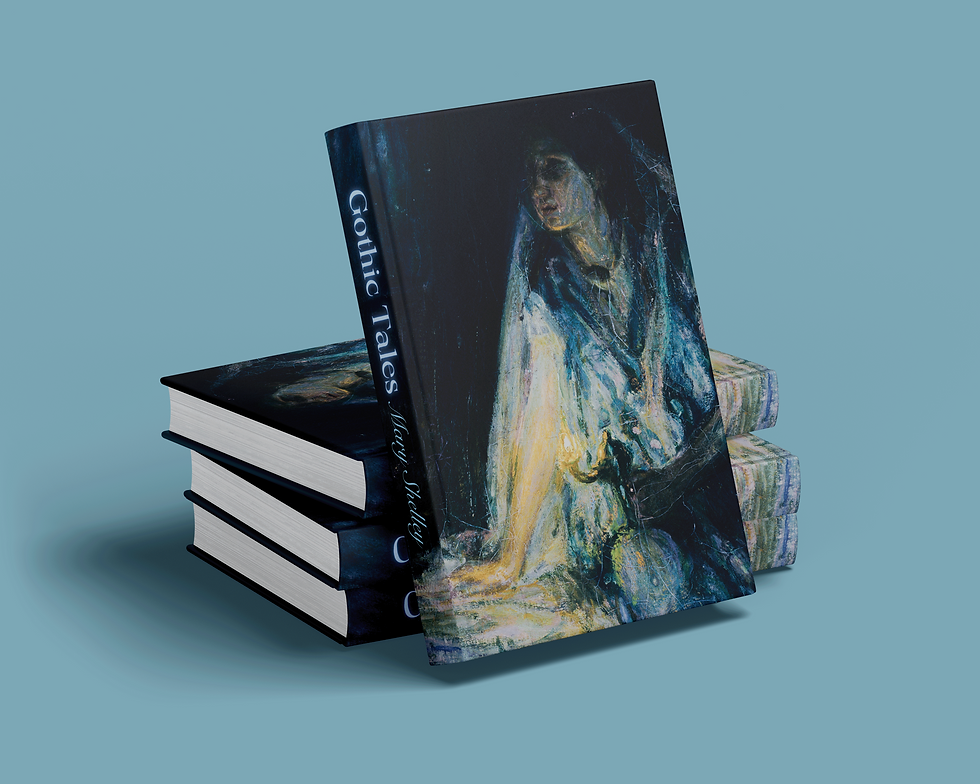
Meet the Mary Shelley You Weren’t Taught in School
These tales were never meant to be swallowed by dull, generic editions. They were meant to be felt. Seen. Experienced.
Illustrated editions don’t change the stories. They reveal the depths that were always there.
If you want to read the side of Mary Shelley that whispers instead of shouts, the one that deals with shadows, mourning, dreams, doppelgängers, and ruin…then these tales are waiting for you.
Buried for too long. Now brought back to life.


Comments